
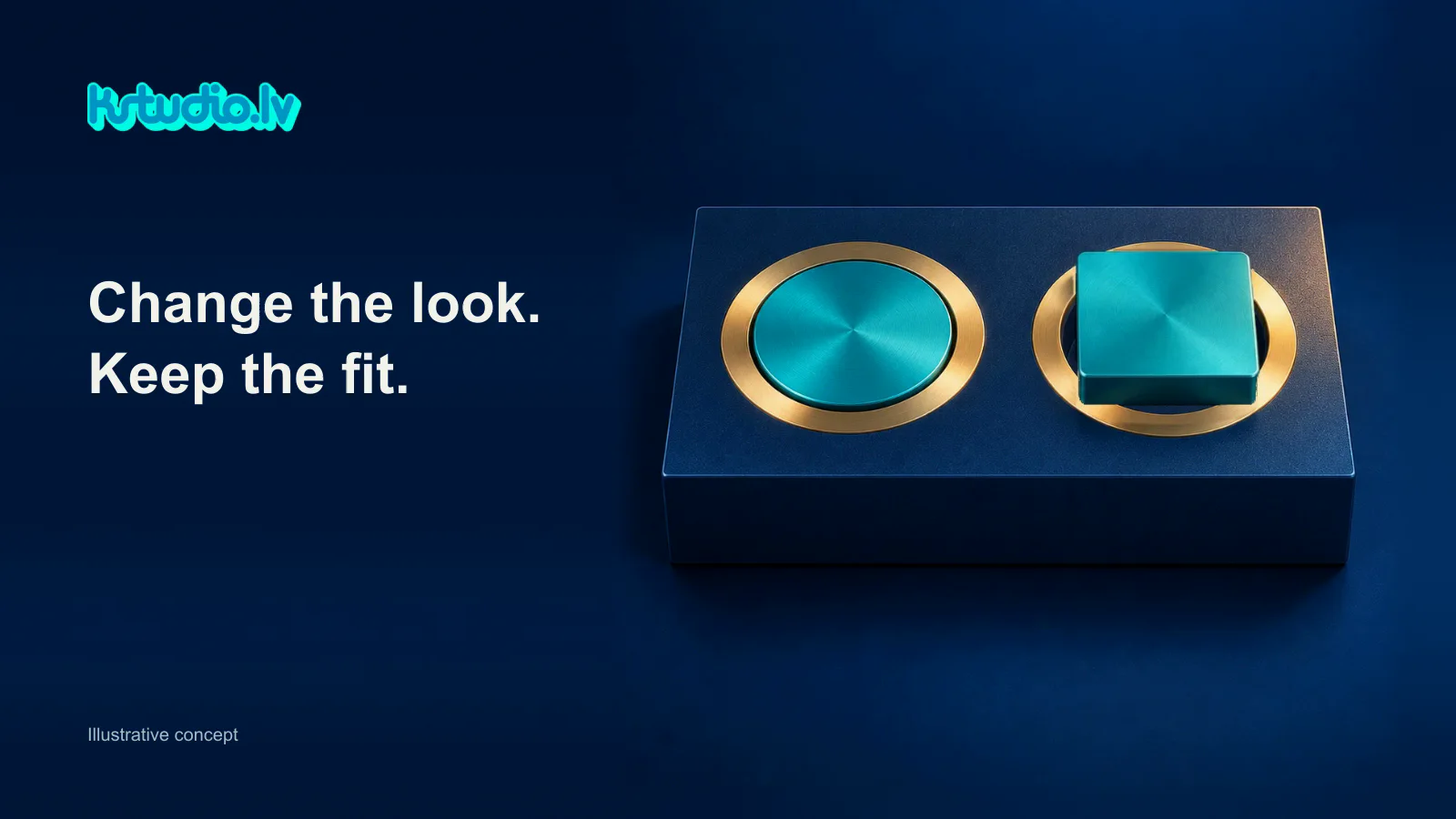
A new material can make a game creative feel different. A new outline can change what the piece is able to do. If the brief calls both a “restyle,” the team still has a decision to make.
Before choosing the new look, I'd put two columns in the brief: CAN CHANGE and MUST PRESERVE. The first gives the art team room to explore. The second names the parts of the product that the creative needs to represent.
What can change
List the visual choices the team has agreed to vary: lighting, surface finish, colour or presentation. These are possibilities, not an automatic licence to change everything on the list. A colour may identify a team, a hazard or a valid move, so its role matters.
Make the permission specific. “Explore a metallic finish” gives a different instruction from “redesign the game pieces.” Neither is inherently better; they ask for different work.
What must remain true
Imagine a sorting game where a piece's shape determines which opening it can enter. Changing the material leaves that rule intact. Changing the outline may change the available move.
Our illustration of a circle and a square, created with AI, is a visual metaphor for that distinction. It is not a capture of a game, a client case or an engineering test. The point is the relationship between a property and an action, not a ban on square pieces.
For the creative you are briefing, identify the properties that define the interaction. Then write down the player's action and the result the ad is allowed to show.
Review the action as well as the image
Put the new variant beside the approved reference and ask:
Does the player perform the same action?
Do the same rules determine what is possible?
Does the shown result still match the product?
A difference is a decision to discuss. It may be exactly the experiment the team wants. In that case, approve it as a new concept, with its own scope, rather than treating it as an unnoticed art adjustment.
KSTUDIO can contribute here through visual variant production, working alongside your team with both the creative freedom and the product constraints agreed.
For a separate review at the file level, KSTUDIO's Playable Checker inspects HTML/ZIP packages. It does not play the game or judge whether the creative represents the product correctly.
For your next restyle, fill in the two columns before choosing the new look. Use the same columns when reviewing the result.
Comments (0)
Awaiting moderation. Only you can see this.