

The video is finished, and you need a static for the same campaign. Reusing a frame is a reasonable starting point: the subject, artwork and visual style already exist.
The decision is whether that frame carries the message on its own, in the space the static will occupy. That is something you can review before commissioning a rebuild.
Start with the frame you have
View the candidate at its intended display size, with the actual headline and required branding. Is the main subject clear? Does the text have enough room? Can the viewer understand the intended message without the preceding shot?
Video can direct attention through movement and timing. A static presents its visible elements together. A prop that briefly establishes a scene may compete with the subject once the picture stops moving.
If the frame already has a clear focus, usable text space and sufficient image detail, keep it. A different format does not automatically require a new composition.
Work out which elements can move
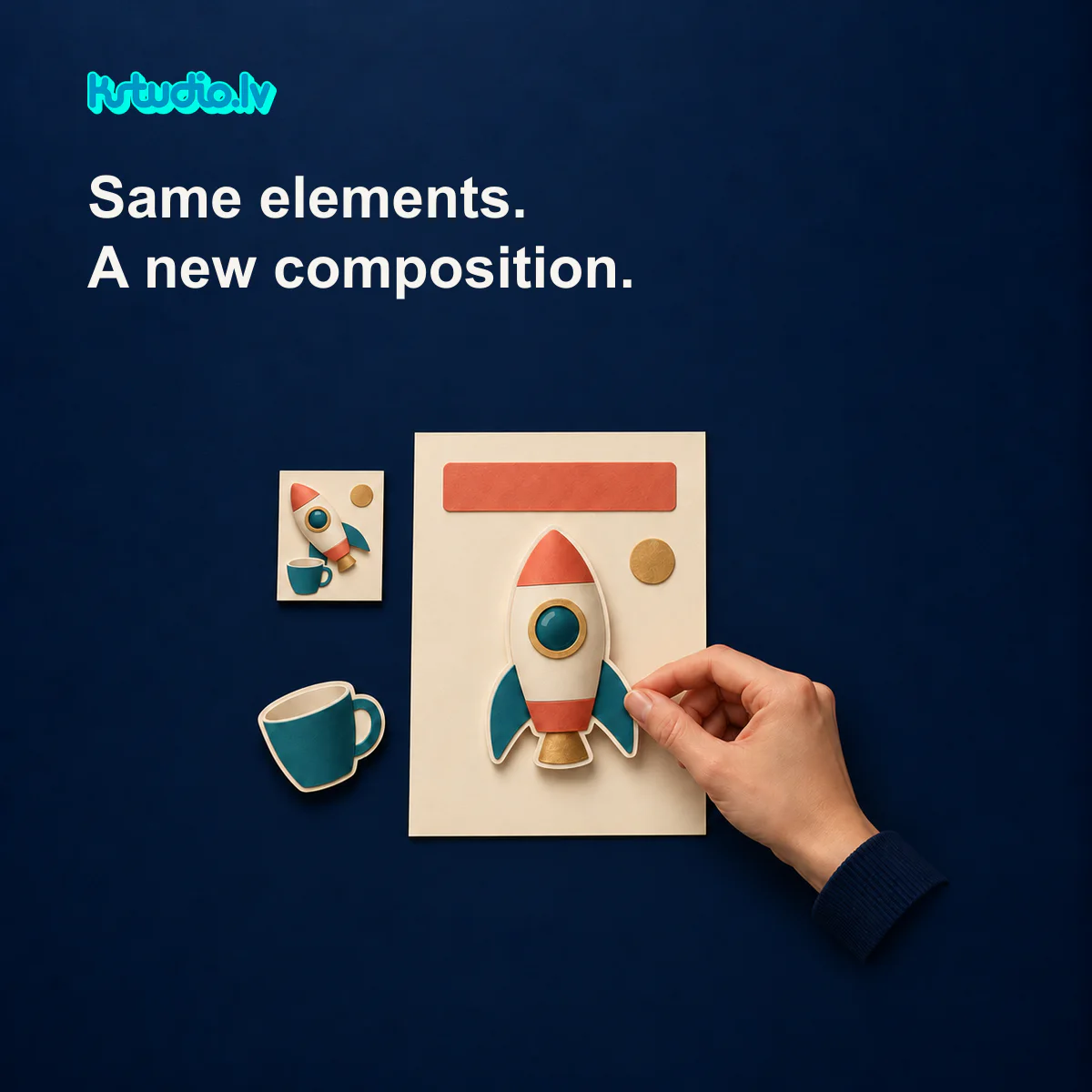
Imagine a rocket lifting off from a desk. The camera follows it, leaving a cup behind. An earlier frame might put the cup beside the rocket and a wing where the headline needs to sit.
The paper illustration makes that rearrangement tangible: a hand positions a coral rocket on a new layout while the cup sits outside it. The separate cutouts stand for available design elements. This is an illustrative scene, not a screenshot from a client film.
In production, that freedom depends on the sources. Layered artwork may let the designer move the rocket independently. An accessible 3D scene may allow a new object position or camera angle. A flattened video frame contains the visible picture; it does not supply the original editable layers or reveal the background hidden behind an object.
Choose the step that solves the layout
The four routes have different uses and limits:
Use the frame when the subject, message and required branding already fit. Check its detail at the final size before treating it as the finished image.
Crop when removing surrounding space gives the subject the right emphasis. A tighter crop can also remove useful context or leave fewer pixels for the final export. It cannot move two objects independently.
Recompose when the objects or text need different positions. Available layers or separate assets give the designer room to arrange them. With only a flat frame, any reconstruction needs its own scope and review.
Render again when an available scene needs a different camera, object arrangement or lighting. This provides another source image for the layout and adds scene work and a fresh export to the task.
A useful brief names the source file and version, candidate timecode, target dimensions, exact copy and elements that must remain. It also lists the editable sources the team can access. Add the specific problem: for the rocket example, keep the rocket prominent, reserve headline space and remove the cup from the layout. The production team can then recommend a route against those requirements.
Review the composition, then the file
At KSTUDIO, adapting existing material includes deciding what can be reused and arranging what the standalone creative still needs. Review the proposed static at its intended size, checking subject emphasis, readable text and required branding together.
Once the layout is settled, use our free Static Ad Check to inspect the image file and its metadata, and preview a crop or placement reference. Composition, text readability and campaign performance remain separate judgments; the tool does not provide a design or CTR verdict.
Comments (0)
Awaiting moderation. Only you can see this.