
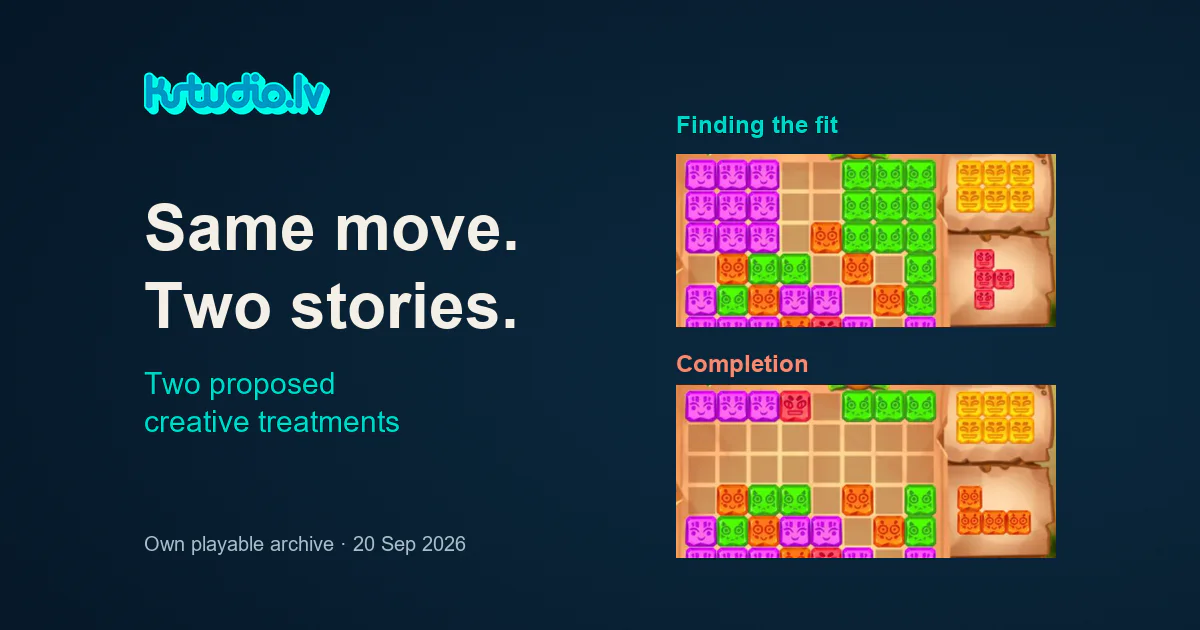
A brief can ask for satisfying puzzle gameplay without saying what the satisfaction is meant to come from. Completing two nearly full rows and recognising a useful place for a piece are two different creative starting points. They can use the same mechanic while giving the scene different work to do.
An archived September capture from our Adventure Blocks demo shows a red T shaped piece clearing two rows. We are proposing two treatments around that recorded move. The source is real gameplay; the treatments are proposals, not completed edits or findings about the people who play.
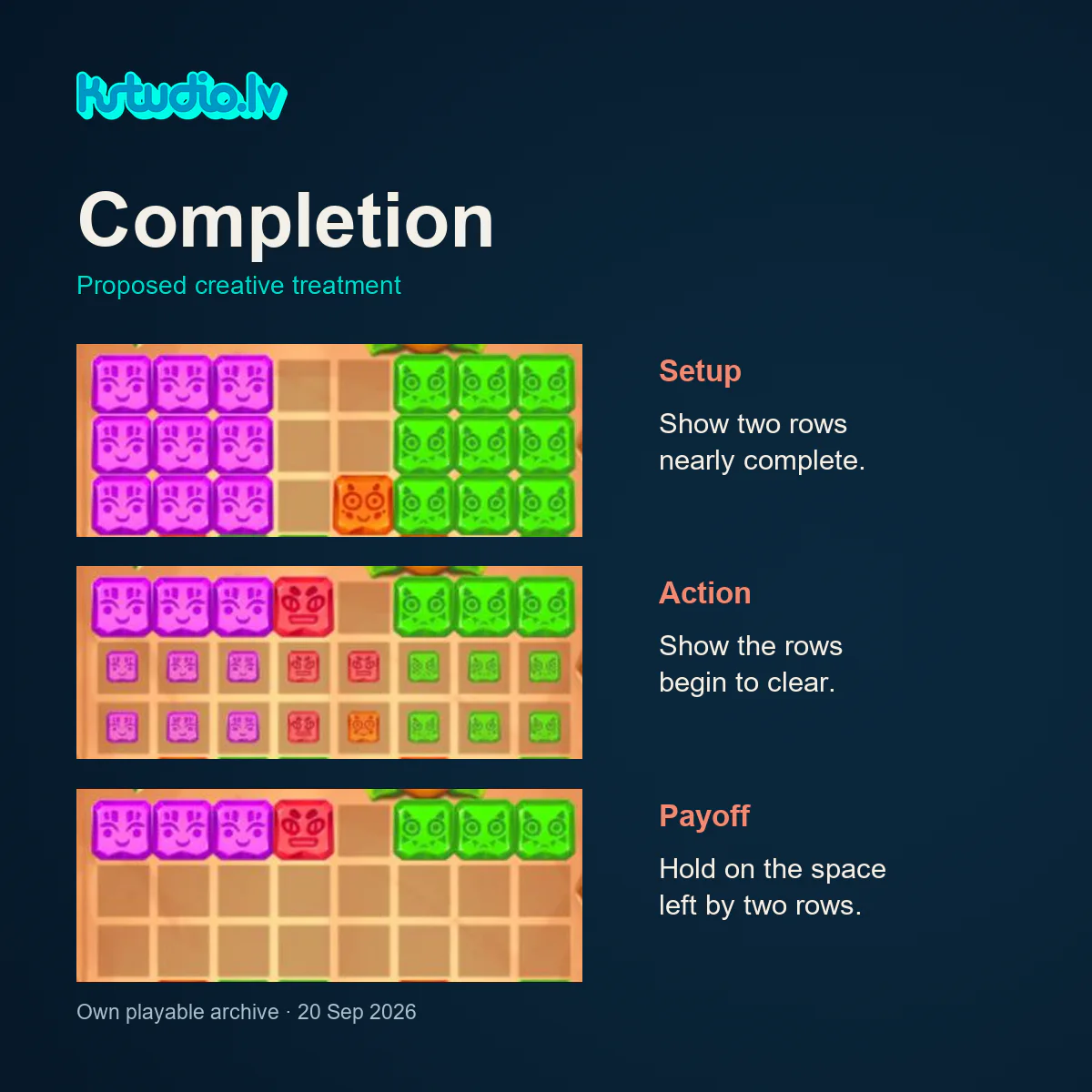
The first treatment makes completion the promise. Its proposed setup gives us two readable rows and their remaining spaces. The piece moves into that space. When the two rows clear, the scene gives the newly empty cells time to register. The placement is the action that delivers the payoff; the cleared space is where the idea lands. This treatment is intended to foreground the pleasure of finishing something.
The second makes recognising a useful fit the promise. Its proposed setup gives more attention to the offered piece and the available board space. The viewer has a chance to consider their relationship before the placement. The move then makes the fit apparent, followed by the real clearing result. The scene is organised around finding a place for the piece, while completion remains the consequence. That is a different centre for the story, even when the underlying move is the same.
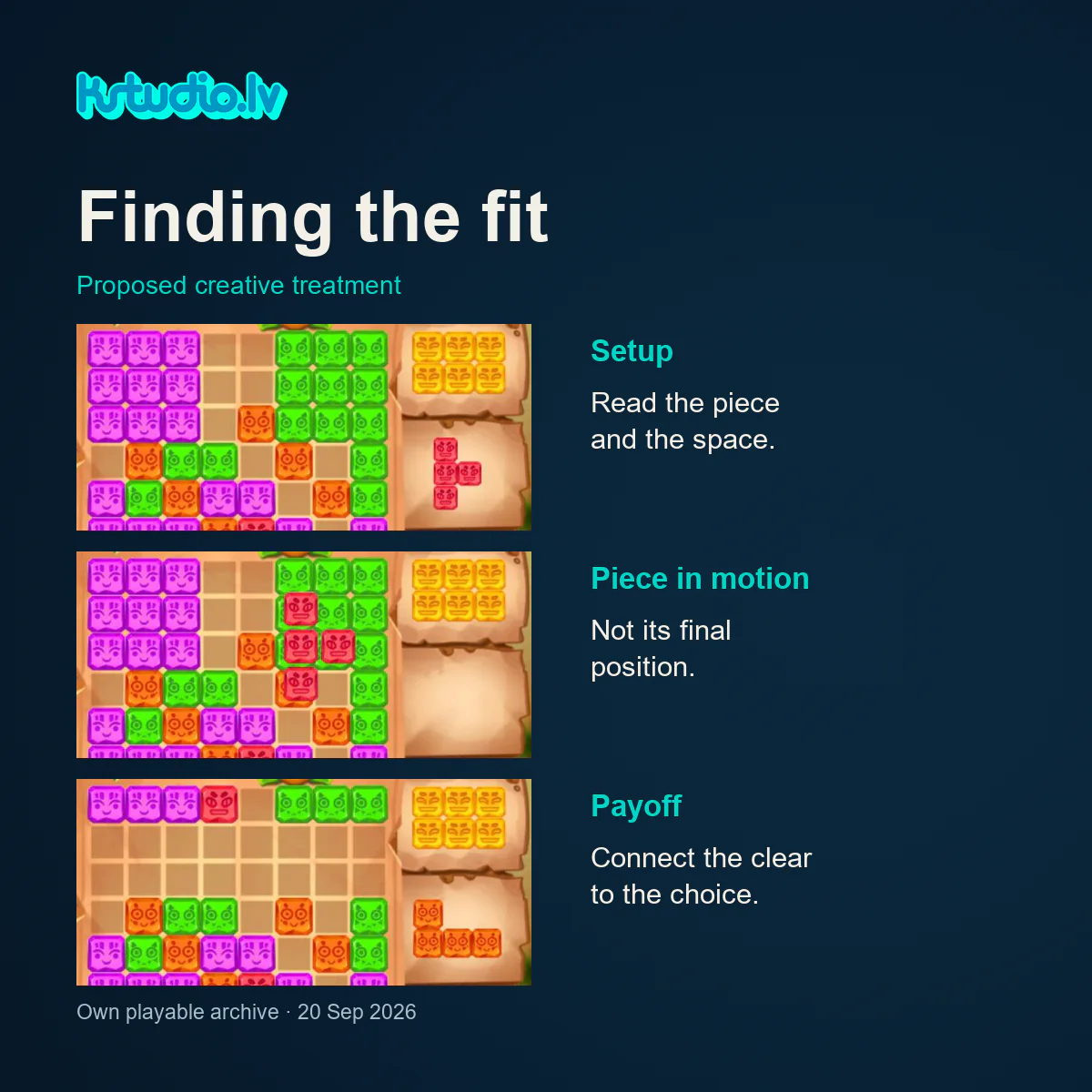
Both proposed treatments would preserve the orientation and outcome in the archived capture. Two rows clear, a red tile remains in the top row, the game score goes from 0 to 320, and the middle tray receives a replacement piece. Those are the visible consequences to keep understandable. Neither concept needs an invented rotation, a fake mistake or a claim that there was only one possible placement.
The difference also needs to extend beyond the opening. In the completion treatment, the rows' progress and their clearing carry the scene. In the fit treatment, the relationship between the piece and its space remains legible through the action. If the rest of the scene makes the same choices, swapping the first caption has not yet delivered the second idea.
A useful review can begin with one sentence in the brief: describe what the viewer should anticipate and which moment should fulfil it. Then point to the parts of the proposed scene that do that work. This gives a creative lead a concrete basis for discussing a variant before commissioning its production. It also makes an unclear proposal easier to revise: the team can change the scene's emphasis instead of adding more decoration.
The two pleasures need not be exclusive. One scene may contain both, and one person may enjoy both. Choosing an emphasis is a creative decision; it does not establish two audience segments or tell us which treatment will work better. Those remain questions for evidence from real viewers. At this stage, we are defining two ideas clearly enough to explore them.
Which reason to play does your current creative show, and which would you like to explore next?
Separate technical resource: Playable Checker checks static HTML/ZIP files and source. It does not evaluate gameplay, player motivation or the quality of these concepts.
Comments (0)
Awaiting moderation. Only you can see this.