
A request to capture a particular game move has two parts: the action on screen and the conditions that make it possible. A link can identify the game, but it does not necessarily specify the board, the offered pieces or the result the person commissioning the clip expects.
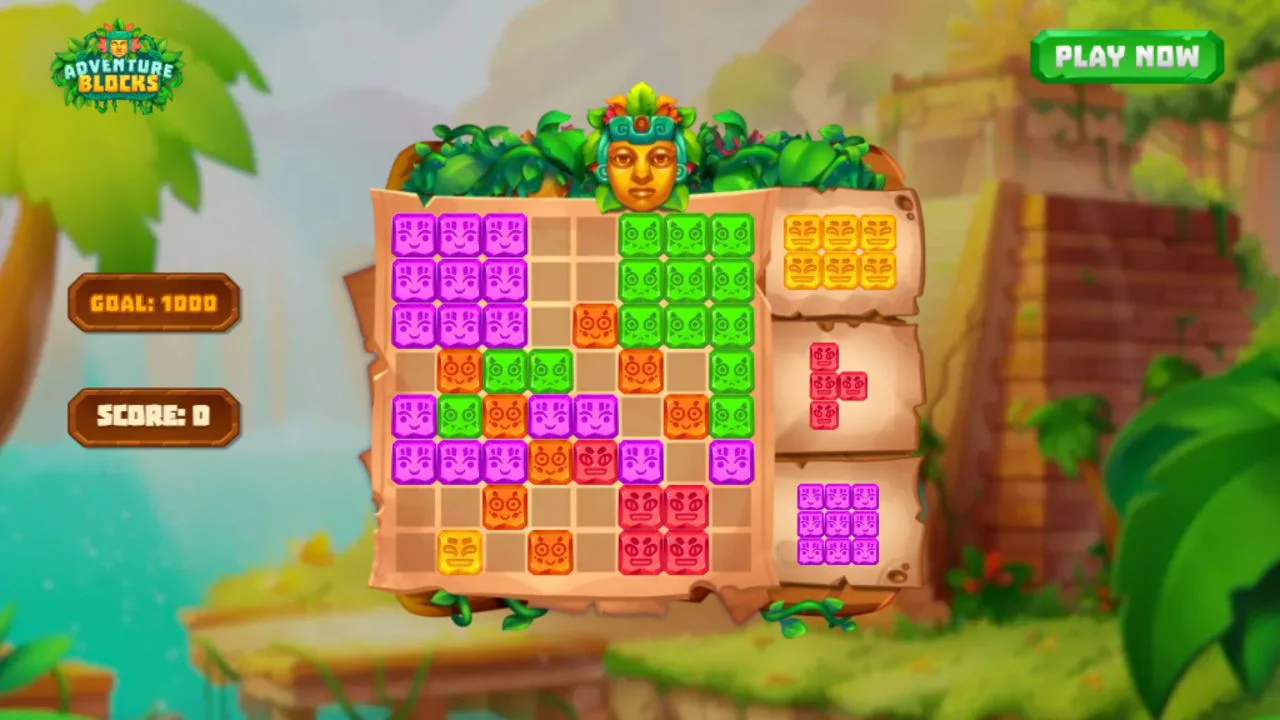
One reference in our Adventure Blocks archive makes this concrete. A red sideways T piece starts in the middle tray. Its move clears two rows, the game score goes from 0 to 320, and the tray receives a replacement. The source is a browser screenshot sequence captured in September. It gives us visible before and after states for a brief.
The first decision is whether those exact states matter. An identical arrangement request would require the same starting board, offered piece and orientation, with the specified result. An equivalent result request might allow a different layout while still requiring one genuine placement to clear two rows. That permission needs to be explicit. Another legal move is not automatically an acceptable substitute.
The public Adventure Blocks HTML inspected on 9 November uses random generation for the board and pieces. We found no implemented seed or saved state loader in that inspected file. A reload therefore does not guarantee the same starting arrangement. This is a finding from source inspection, not a recorded replay test. Nor does it establish that the November build is identical to the one behind the September archive.
For the reference move, a useful brief can attach the full score 0 board, identify the red middle tray T in its offered orientation, and attach the two row clear result at score 320. It can name the visible details that must be retained, including the remaining red tile and tray change. The intermediate source image catches the piece in transit; it should not be used as the final target position. The selected sequence does not supply a full size frame of the piece locked in before clearing.
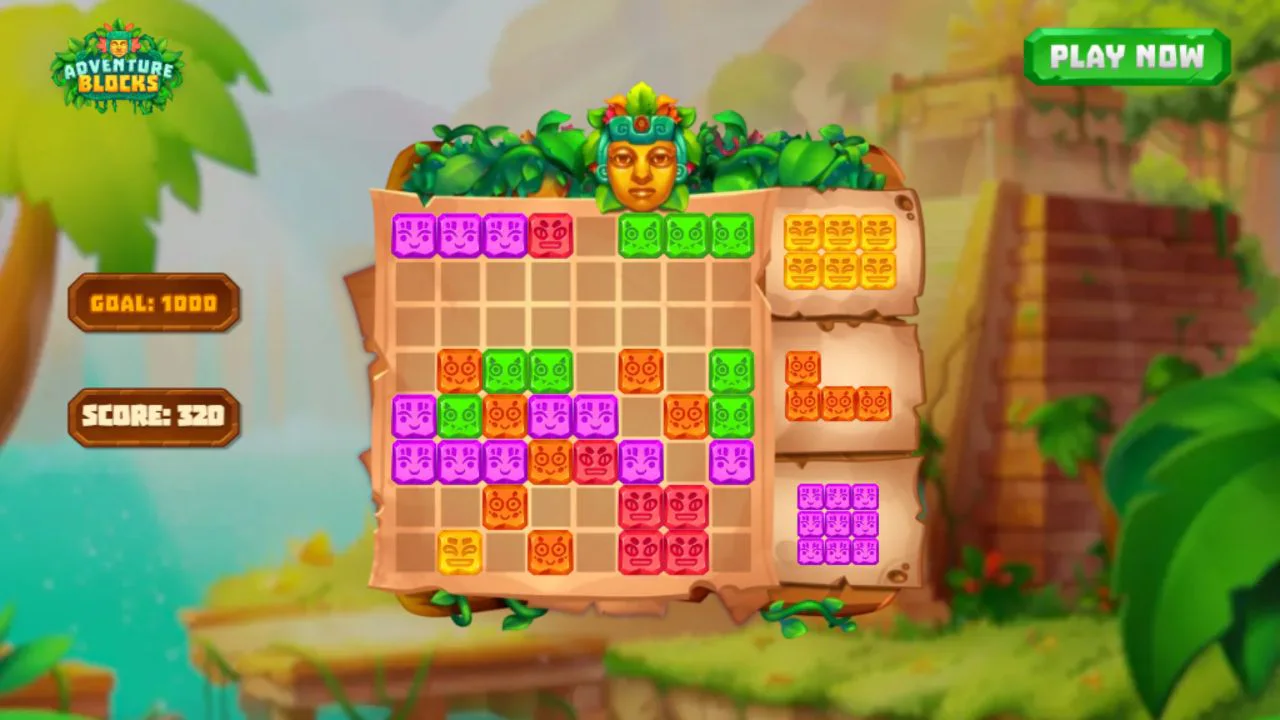
The production build belongs in a separate field. Record the intended revision and configuration rather than relying on a mutable entry link. Capture dimensions and input mode belong there too. The reference images are 1280 by 720 in landscape, but the selected packet does not establish their exact build revision or input mode. A new request for landscape and mouse input would be a production specification, not a fact recovered from the old recording.
Input choice can matter to the gesture. In the inspected code, mouse input centres the piece on the pointer, while input other than a mouse lifts it above the pointer. Reusing pointer coordinates across those modes is therefore not a reliable way to describe the same placement. A visible target and a named input mode communicate more than an unexplained cursor path.
A good brief does not create a replay facility. It makes the requirement and its limits reviewable. If the exact arrangement is essential, confirm a supported route to that state before agreeing to reproduce it. If an equivalent outcome is acceptable, list the differences allowed and preserve the real resulting game state. Keep a successful source take identified rather than assuming a reload will recover it.
For a gameplay capture brief, describe the move, the required starting state and the build or source material available:
Separate technical resource: Playable Checker checks static HTML/ZIP files and source. It does not record, restore or reproduce gameplay.
Comments (0)
Awaiting moderation. Only you can see this.